
"growing coffee plants"
20000 article(s) found
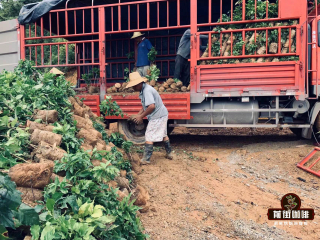
Yunnan small grain coffee taste characteristics Yunnan coffee growing area varieties introduction which brand of Yunnan coffee beans is good?
Exchange of professional baristas Please follow the coffee workshop (Wechat official account cafe_style) Yunnan coffee growing season small coffee berries Yunnan small grain coffee 34-year-old fruit tree. Coffee is a short-day plant. Coffee has the characteristics of multiple flowering and concentrated florescence. Florescence of small seed coffee in Yunnan 2

What is the geographical location of coffee cultivation in Kenya? Water from the Kirinyaga treatment plant in Kangunu, Kenya
Professional coffee knowledge exchange more coffee bean information please follow the coffee workshop (Wechat official account cafe_style) where is the location of coffee cultivation in Kenya? Description of the flavor of washed AA coffee from the Kangunu Kirinyaga treatment plant in Kenya? The producing area of Kirinyaga, Kangunu, comes from Embu, a community south of Nairobi, at an altitude of 1600-1700. According to the cup survey of the bean merchant

Do you know there is coffee in Laos? Laos Coffee introduction |
The main coffee growing area in Laos is the high-altitude Boravan Plateau, where there is volcanic red soil, where coffee plants thrive. Coffee plant varieties include Arabica coffee, Robusta coffee and Liberika coffee. The French first introduced coffee plants to the region in the 1920s, and the French designated its fertile soil plateau as the main coffee growing area.

The villagers grow Arabica coffee beans and smell coffee in Datong.
Liu Yixin, a native of Datong, has successfully planted an "Arabica" coffee tree, which is named "Qilan Dayang Coffee" according to the homonym of the Atayal people and the geographical location of the park. It is said that the coffee beans grown in the mountains are rich in acid, and other villagers have tried to plant them one after another. To make Datong villagers float more coffee flavor. Liu Yixin and Huang Xiulan used to grow cold vegetables for a living. When they visited the south six years ago, they found Ali.

What are the advantages of growing coffee in Yunnan? introduction to the characteristics of growing coffee beans in Yunnan
Professional coffee knowledge exchange more coffee bean information please follow the coffee workshop (Wechat official account cafe_style) the front street of Yunnan Baoshan Huaguoshan Coffee introduction in China, the most suitable provinces for growing coffee are Yunnan, Hainan, Guangdong, Guangxi and so on, of which Yunnan Province accounts for more than 95% of the country's planting area and output. Dehong, Lincang, Pu'er and Baoshan in the south and west of Yunnan

A brief introduction to the planting environment in Shaqiso producing area of Ethiopia in the field of fine coffee
A brief introduction to the growing environment of boutique coffee in Shaquiso, Ethiopia (Shakisso), located in the southern part of Guji and Oromia, close to Sidama and Gedeo. There are many pits in this area, which were used to mine gold in the early days, so there are many potholes in this coffee growing area. This allows people to walk between coffee growing areas
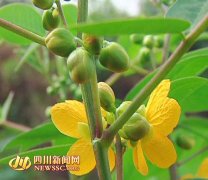
Introduction of Herbal Coffee in Qifeng Town of Lu County Opens a New Channel for Farmers 'Income Increase
On July 18, when the author came to Jinyu Village, Qifeng Town, Lu County, villagers Chen Dazhang, Li Baoshan and other people were busy loosening soil and weeding herbal coffee in the field. "If the harvest is good in August this year, he will continue to expand the planting scale." Chen Dazhang pointed to the coffee on the slope and said,"We have planted corn, sorghum, wheat and other crops, but this is the first time to grow herbal coffee."

Katim Coffee Bean Historical Story the characteristics of hand-made flavor introduce the output of Yunnan boutique coffee bean varieties
The field management measures are suitable for the management of general small-grain coffee. Propagation method: adopt seed propagation, select 5-year-old fine mother tree, harvest fully mature, fruit shape is normal, full, size is basically the same, with two-seed fruit as seed, using sand bed to promote germination, plastic bag seedling. The annual average temperature of the selected forest land is 1921 ℃, and the accumulated temperature of 10 ℃ is more than 6800 ℃.
What are the producing areas of Yega Xuefei produced in Kebel Aricha processing plant to grow Yega Xuefei
Yega Xuefei is produced at the Kebel Aricha processing plant, where there are about 650,700 small coffee farmers who send ripe coffee berries here for processing in exchange for cash. After the treatment plant selects the available berries, they are directly exposed to the sun on the scaffolding and are turned every 2-3 hours in the first few days to prevent overfermentation. After four to six weeks of sun exposure, workers will look at the weather and temperature.

Coffee planting the main source of how to grow coffee trees
One of the characteristics of a coffee tree is its fruit, which can bear fruit several times a year, and another is that flowers and fruits coexist at different stages of ripening. If the trap is overripe, the beans will rot, and if not ripe enough, the beans will not ripen by themselves. The average yield of a tree is about 2 pounds a year. The ideal growing environment for coffee trees is between 65 degrees Fahrenheit and 75 degrees Fahrenheit.

Alishan Tropical Dance Manor introduces what coffee producing areas are there in Taiwan?
Professional coffee knowledge exchange more coffee bean information please follow the coffee workshop (Wechat official account cafe_style) Taimali Township and Luye Township in Taitung can now see coffee trees. In the 1980s, home-grown coffee could be seen on the side of the Taijiu highway. Twenty years ago, Pan Yung-feng, director general of the Luye Rural Peasant Association, tried to grow coffee. At that time, the market of tea was good, and coffee was gradually replaced by tea gardens.

Ethiopian coffee species Origin of Ethiopian coffee
Saifeng coffee beans grow in close to the natural environment, after years of planting under the same growth conditions, Ethiopian coffee beans have gradually adapted to the environment here. More than 60% of coffee beans are grown in forests or semi-forests. Large-scale coffee-growing villages account for about 35% of the country's total coffee production. These use multiple layers.

The growth process of Coffee Tree introduction to the method of flavor description in planting environment and region
The growing process of coffee trees: flavor description of growing environment and producing area although altitude is only one of the many factors to measure the quality of coffee, it is definitely the most important one. The next time you go to the coffee shop, please ask the barista to tell you the origin of the coffee in the cup, which will not only enrich your coffee knowledge, but also improve the quality of your overall coffee experience.

Characteristics of Coffee planting in Xidamo Coffee producing area what are the characteristics of coffee plantation in Guji producing area?
Professional barista exchange please follow the coffee workshop (Wechat official account cafe_style) Ethiopia washed Sidamo G1 Valley Jikol Shamakanisha Nisha processing plant LOT#2 (Ethiopia Washed Sidama Guji Kercha Mokonisa Mill Lot#2) flavor description: apricot peach, lemon, sweetened peach, tender ginger, floral notes, juicy and rich taste, sweet sugar, citrus

Coffee growing knowledge
Coffee is a drink that gives the public the impression of being black, bitter, sleepless, and excited. The coffee beans we see in coffee shops are dark brown and belong to roasted coffee beans, while the color of coffee liquid is amber. Coffee comes from coffee beans, which in turn are harvested and processed from the fruits of trees. Coffee growing habits: coffee

A brief introduction to the planting market price of sweet, non-astringent, non-bitter and non-sour Mahi boutique coffee beans
And Taiwan's first coffee, not in Gukeng, not in Dongshan, but in Alishan Le Ye Village, where the deadly fragrance Alishan Mafeel is planted in the Alishan Mountains. Alishan Mountains are uniquely located in the global coffee belt. Due to the high altitude in the mountains and the temperature difference of more than 10 degrees between day and night, the coffee beans produced are of the best quality, with full grains and thick pulp.

The planting technology of coffee tree introduces the environment in which coffee tree is suitable to grow.
Field management of loosening soil and weeding: when the seedling height is 3cm to 6cm, the weak or overdense seedlings are pulled out; when the seedling height is 10cm and 13cm, the plant distance is about 30cm. Soil loosening and weeding were carried out at the same time between seedlings and fixed seedlings to keep the soil loose. Coffee beans are more drought-tolerant, and the soil can grow normally when the soil moisture is maintained. During the drought, the coffee beans should be properly watered, but there should be less squatting seedlings during the seedling fixing period.

A brief introduction to the planting situation, geographical location, climate and altitude of Taiwan's high-quality coffee with mellow flavor.
In 1941 (the 16th year of Rizhaohe), most of the raw beans were shipped back to Japan. The planting area of coffee in Taiwan has reached 75 hectares, and it was called the largest coffee factory in the far East in its heyday. In 1945 (Rizhaohe 20 years), the area of coffee cultivation in Taiwan expanded to 113 hectares after the war. After the surrender of Japan, Taiwan was restored, and the national government strongly advocated the reclamation of fertile land and the cultivation of cash crops.
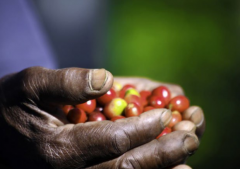
Relationship between coffee flavor and planting altitude
The influence of geographical location on the flavor of coffee beans is profound. All coffee grows in the tropics, and the altitude at which it grows has a profound effect on the taste of the coffee. From the tropics to 30 degrees north latitude and the mountains south of the equator produce the world's truly high-quality Arabica coffee. Central and South America, South Asia and some Pacific islands, south-central Africa is also the heaviest in the world.

Coffee knowledge | effect of altitude on coffee | the higher the altitude, the better the coffee?
Like wine, beer and tea, the way coffee beans grow can greatly affect the taste of the cup you end up drinking. There are many factors that affect the quality of coffee beans, but none is more important than the growth of coffee beans. To understand why altitude has such a great effect on the flavor of coffee beans, we must study plant biology in depth. Usually, the higher the altitude,